
Rooted in Care: Building a Garden That’s Safe for Seniors
Gardening is more than just a hobby. It can be therapeutic, engaging, and deeply rewarding for older adults and their families. When designed with memory care in mind, a senior-safe garden can support physical activity, sensory stimulation, and emotional well-being.
What Makes a Garden Senior-Safe?
Creating a safe and enjoyable garden starts with thoughtful planning. The goal is to balance beauty, accessibility, and functionality.
When planning a senior-safe garden, consider:
Scents and sensory appeal: Fragrant flowers and herbs like lavender, mint, and rosemary can stimulate memory and encourage relaxation.
Safety: Avoid toxic or thorny plants and choose non-slip pathways and raised garden beds to help reduce fall risks.
Appearance: Bright, colorful flowers can create a welcoming and uplifting environment. A variety of colors can also add visual interest and stimulation.
Familiar and local plants: Well-known flowers, fruits, and vegetables can spark recognition, comfort, and conversation.
A thoughtfully designed garden should feel calming, familiar, and easy to navigate.
Finding the Perfect Location
Creating a garden begins with choosing the right space, whether at home or within a community setting. When deciding on a location, it is important to consider safety, accessibility, and access to natural resources.
Safety at the Center
Walkways should be smooth, level, and easy to navigate, free from cracks or uneven surfaces that could pose a tripping hazard. Raised beds and clearly defined garden spaces can also help keep the area organized and accessible.
Accessibility for All at Any Stage
Accessibility is just as important as safety. A garden should be designed so everyone can participate, regardless of ability.
Raised beds or container gardens make it easier to reach plants without strain, while wide pathways allow room for wheelchairs or walkers.
Simple additions like shaded seating areas and easy-to-grip tools can help make gardening more comfortable and enjoyable at every stage.
Supporting Natural Growth
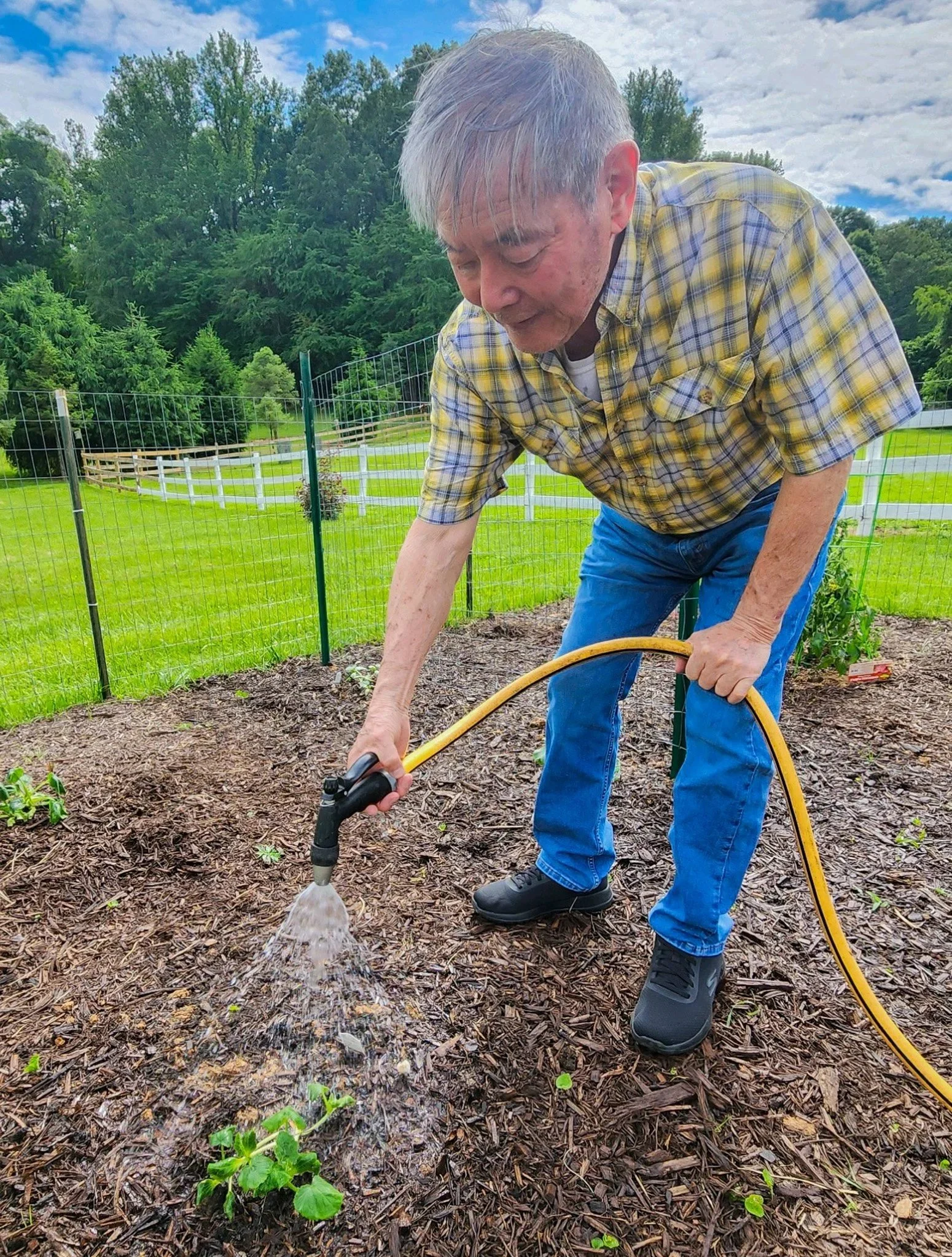
A successful garden also depends on the environment around it. Most plants thrive in spaces with plenty of sunlight, so choosing a location with consistent light throughout the day is important. Access to water is equally essential, whether through a nearby hose, irrigation system, or watering cans.
Local climate matters too. Selecting plants that are well-suited to the environment can help support long-term success while reducing maintenance challenges.
A Gardening Journey for Every Ability Level
Gardening does not have to look the same for everyone. By adapting tasks based on ability and stage, individuals can continue participating in ways that feel meaningful and fulfilling.
Early Stage: Hands-On and Active
In the early stages, individuals can often take a more active role in the gardening process, including:
Planting flowers, herbs, and vegetables
Choosing favorite blooms and seasonal produce
Light weeding and garden upkeep
Harvesting flowers for bouquets
Because many individuals in the early stages still enjoy independence and creativity, a Garden Club can also help residents feel connected to their community and to one another.
Having a sense of purpose through gardening can be especially meaningful early in the dementia journey.
Middle Stage: Guided Participation
As needs change, gardening can still remain an engaging activity with a bit more support.
At this stage, individuals may enjoy:
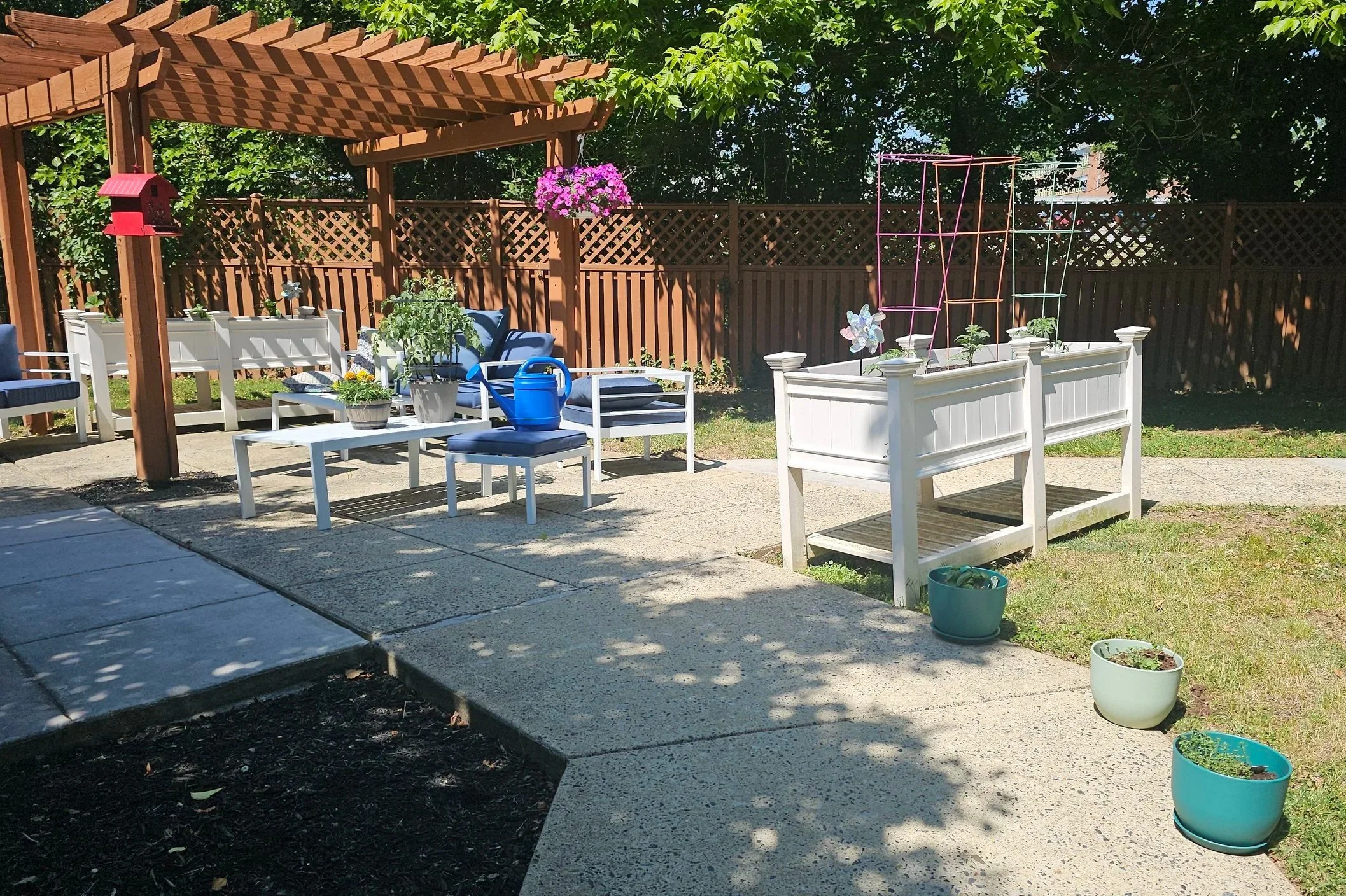
Watering plants with guidance
Helping with planting tasks
Picking fruits and vegetables
Creating simple flower arrangements
Preparing garden items for family visits or events
These activities can help maintain a sense of purpose while supporting safety and comfort.
Late Stage: Sensory & Enjoyment-Focused
In later stages, the focus often shifts toward sensory experiences and peaceful enjoyment.
Gardening can still play a meaningful role through:
Experiencing familiar scents and textures
Spending time in a calming courtyard or outdoor space
Assisted watering or light interaction with plants
Enjoying fresh food grown in the garden
Similar to Inspirations’ Namaste program, these sensory experiences can help residents feel comforted and connected without words.
Even without active participation, the garden itself can become a source of comfort, familiarity, and connection.
The Lasting Impact of Gardening
A thoughtfully maintained senior-safe garden offers more than visual beauty. It creates opportunities for gentle physical activity, meaningful social engagement, sensory stimulation, emotional connection, and meaningful reminiscence.
Most importantly, it helps individuals stay connected to nature, to familiar routines, and to themselves at every stage of life.
At Inspirations, we believe meaningful engagement matters at every stage of the dementia journey. We are proud to support both residents and families through compassionate care, purposeful activities, and practical resources for home caregiving.
Inspirations’ Activity Idea: Scented Herb Packets
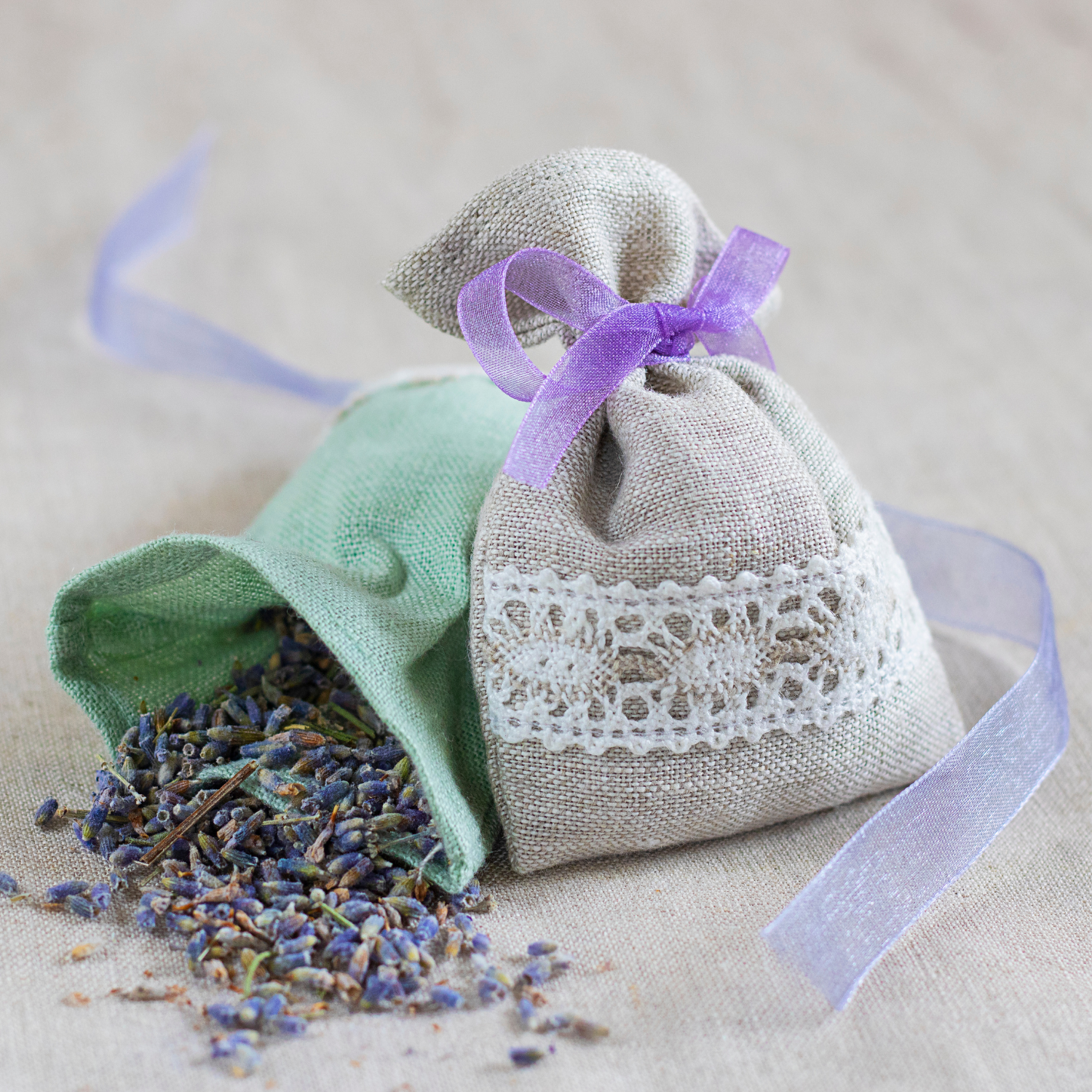
Scented herb packets are small bags filled with herbs and rice that can add calming, familiar scents to drawers, closets, or personal spaces. This simple activity encourages sensory engagement while creating something meaningful and practical.
What you will need:
Small muslin bags
Dried herbs: lavender, rosemary, rose petals, or mint
Essential oils or fragrance oils (optional)
White uncooked rice
A small bowl and spoon
Funnel
Glue, thread and a needle, or another method to securely close the bag
Have your loved one begin by choosing the scents they would like to use. This can be a wonderful opportunity to talk about favorite scents, memories, or stories connected to certain smells.
After selecting the herbs, combine them in a small bowl with a small amount of uncooked rice and a few drops of essential or fragrance oil if desired. The rice helps absorb the oils, so the scent lasts longer without becoming too wet.
Once everything is thoroughly mixed, hold the funnel while your loved one fills the muslin bag with the scented mixture.
After filling the muslin bag, tie or sew it closed securely.
These scented herb satchels can be shared as thoughtful gifts or used to bring comforting scents into personal spaces throughout the home or community.